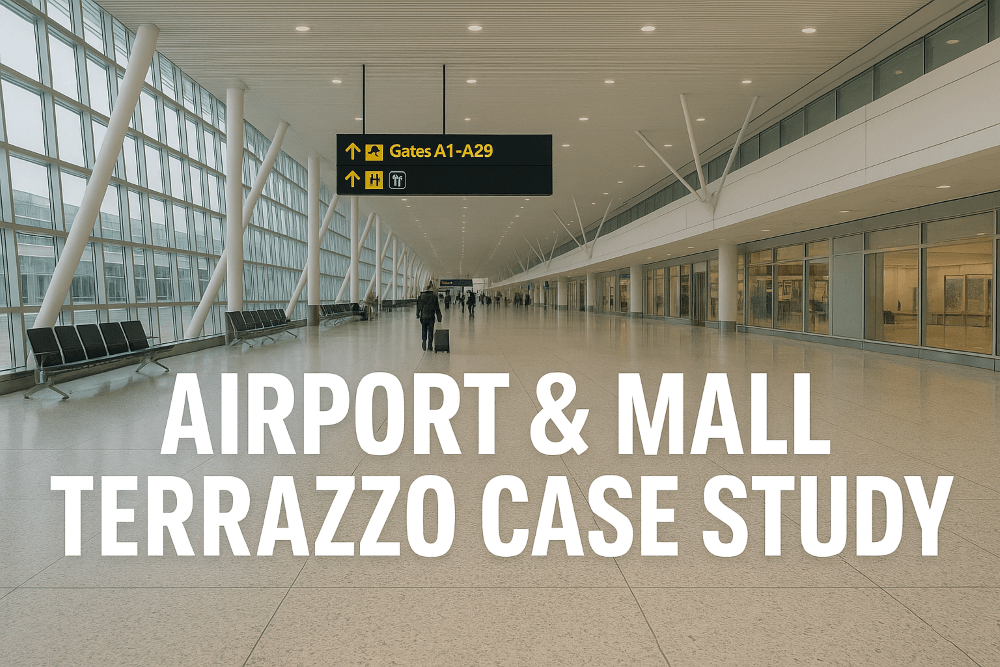
Case Study: Airport & Mall Terrazzo Projects
Terrazzo has become one of the most widely specified flooring materials for large public buildings, particularly airports and shopping malls. These environments demand extreme durability, long service life, low maintenance costs, and a clean, modern appearance capable of handling millions of visitors each year.
This case study examines how terrazzo performs in real-world airport and mall projects, focusing on material selection, installation approach, performance outcomes, and long-term maintenance results.
Project Background
Project Types
International airport terminals
Regional transportation hubs
Large shopping malls
Mixed-use commercial complexes
Primary Requirements
Extremely high foot traffic resistance
Seamless large-area flooring
Slip resistance and safety compliance
Easy cleaning and long-term maintenance
Consistent appearance across large surfaces
Material Specification
Terrazzo System Used
Cement-based terrazzo for heavy-duty zones
Epoxy terrazzo for interior commercial areas
Precast terrazzo panels for fast-track construction
Typical Specifications
Thickness: 20β30 mm (flooring)
Aggregate size: medium (3β7 mm)
Finish: honed or polished
Color palette: light grey / neutral tones
Neutral terrazzo colors were selected to enhance brightness, improve wayfinding visibility, and minimize the appearance of wear.
Installation Strategy
Airport Projects
Night-shift installation to avoid operational disruption
Large-format terrazzo slabs to reduce joints
Mechanical lifting and leveling systems
Strict flatness and tolerance control
Mall Projects
Phased installation by zone
Combination of precast panels and poured-in-place terrazzo
Integration with storefront thresholds and expansion joints
Performance Results
Durability
Excellent abrasion resistance under constant pedestrian flow
Minimal surface wear after years of operation
Safety
Slip-resistant finishes applied in key areas
Compliance with international public building standards
Aesthetics
Seamless visual continuity across large halls
Consistent color performance under natural and artificial lighting
Maintenance Performance
Airport and mall operators reported strong long-term maintenance results:
Daily neutral cleaning
Periodic machine polishing
Annual sealing in high-traffic zones
Maintenance teams highlighted terrazzoβs lower life-cycle cost compared to porcelain tiles or vinyl flooring.
Why Terrazzo Was Chosen Over Other Materials
| Material | Durability | Maintenance | Life Cycle |
|---|---|---|---|
| Terrazzo | Excellent | Low | 40β75 years |
| Porcelain Tile | Good | Medium | 20β30 years |
| Vinyl Flooring | Moderate | High | 10β15 years |
| Natural Marble | High | Very High | 20β30 years |
Terrazzo delivered the best balance of performance, aesthetics, and long-term value.
Key Lessons Learned
β Early color and batch planning is critical
β Large-format slabs reduce joints and maintenance
β Proper sealing extends service life
β Precast terrazzo accelerates construction schedules
β Neutral palettes perform best in public spaces
Conclusion
Airport and mall terrazzo projects demonstrate why terrazzo remains one of the most reliable architectural flooring solutions for large-scale public buildings. Its ability to withstand extreme foot traffic, maintain a clean appearance, and deliver decades of service makes it a preferred choice for transportation hubs and commercial developments worldwide.
Our factory supports airport and mall projects with custom terrazzo design, precast panel production, logistics coordination, and technical installation guidance.
β FAQ
1. Why is terrazzo commonly used in airports and malls?
Because it offers exceptional durability, low maintenance, and long service life under heavy foot traffic.
2. What type of terrazzo is best for airport flooring?
Cement terrazzo or heavy-duty epoxy terrazzo with slip-resistant finishes.
3. How long does terrazzo last in public buildings?
With proper maintenance, terrazzo can last 40β75 years.
4. Is terrazzo safe for high-traffic public areas?
Yes. Slip-resistant finishes and proper joint design ensure safety compliance.
5. How is terrazzo maintained in airports and malls?
Through daily cleaning, scheduled polishing, and periodic sealing.
