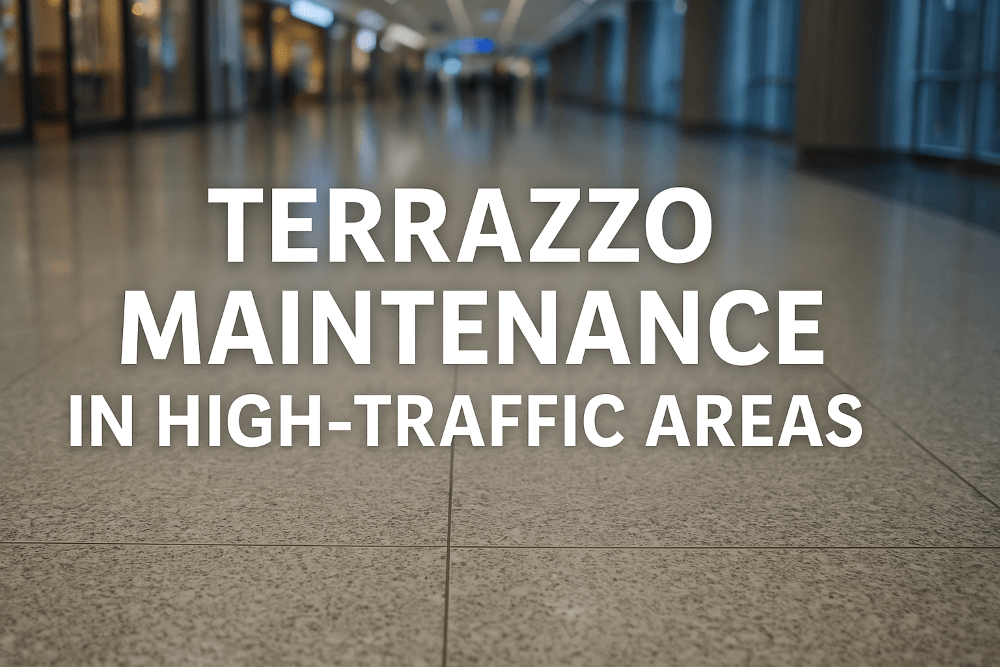
Terrazzo Maintenance in High-Traffic Areas
Terrazzo is one of the most durable flooring materials used in commercial architecture. Airports, malls, hospitals, universities, transportation hubs, and government buildings rely on terrazzo because it withstands millions of footsteps each year while maintaining a clean, polished appearance.
However, even the strongest materials require proper maintenance to retain their shine, structural integrity, and hygiene—especially in high-traffic environments.
This guide provides a complete maintenance workflow including daily care, polishing schedules, sealer recommendations, and long-term durability strategies.
1. Why Terrazzo Performs Well in High-Traffic Areas
Terrazzo is engineered for heavy commercial use due to:
High compressive strength
Dense surface with low absorbency
Excellent abrasion resistance
Compatibility with polishing systems
Long life-cycle compared to tile or vinyl flooring
2. Daily Cleaning Routine
Daily Tasks (Recommended for all commercial spaces)
Sweep or dust mop to remove debris
Damp mop with neutral pH cleaner
Avoid acidic or alkaline detergents
Use soft microfiber pads to protect shine
Neutral cleaners prevent damage to sealers and maintain the terrazzo’s natural finish.
3. Deep Cleaning Strategy
Weekly or Biweekly Cleaning
Auto-scrubbing with a soft brush
Neutral or mildly alkaline detergent
Rinse thoroughly to avoid chemical residue
For Extremely Busy Spaces (airports/stations)
Increase frequency to daily auto-scrubbing
Use walk-off mats at entrances
4. Polishing Requirements for High-Traffic Areas
Polishing restores shine lost through abrasion and micro-scratches.
Mechanical Polishing
Use diamond polishing pads
Suitable for both cement and epoxy terrazzo
Polishing Frequency
Airports: Every 2–4 weeks
Shopping malls: Every 1–2 months
Hotels: Every 2–3 months
Offices: Every 3–6 months
5. Sealing Terrazzo for Long-Term Protection
Sealants protect terrazzo from stains, moisture, chemicals, and wear.
Types of Sealers
Penetrating sealers → long-term protection
Topical sealers → creates a glossy finish
Anti-slip sealers → recommended for wet zones
How Often Should You Reseal?
High-traffic commercial: every 6–12 months
Moderate traffic: every 12–18 months
Sealing enhances stain resistance and prolongs the life of polished surfaces.
6. Stain & Spill Management
Immediate Actions
Wipe spills immediately
Use mild cleaner + warm water
Avoid acidic cleaners (vinegar, citrus)
Common Stains & Treatments
Oil: neutral degreaser
Coffee/tea: hydrogen peroxide-based cleaner
Rubber marks: mechanical scrubbing
7. Repair & Restoration
Even the best-maintained terrazzo may require professional restoration in high-traffic areas.
Common Restoration Tasks
Crack repair
Joint refilling
Grinding and re-polishing
Surface honing for slip resistance
8. Preventive Measures to Extend Lifespan
Implement these measures for maximum durability:
✔ Install walk-off mats at all entrances
✔ Use protective pads under heavy equipment
✔ Maintain humidity and temperature stability
✔ Avoid dragging heavy objects across the floor
✔ Train cleaning staff on terrazzo-safe chemicals
Conclusion
With proper maintenance, terrazzo can last 40–75 years, even in the busiest public facilities. By combining daily cleaning, scheduled polishing, sealing, and preventive measures, contractors and facility managers can ensure terrazzo remains a durable, elegant surface for decades.
Our factory provides a series of terrazzo products like terrazzo slabs, terrazzo tiles, terrazzo bathrooms, terrazzo tables, terrazzo urban furnitures. Any terrazzo project, welcome to contact Milestone International.
❓ FAQ
1. How often should terrazzo be polished in high-traffic areas?
Airports may require polishing every 2–4 weeks, while malls and hotels follow a 1–2 month cycle.
2. What cleaning products should be used?
Neutral pH cleaners are recommended; avoid acidic or harsh alkaline chemicals.
3. How often should terrazzo be sealed?
High-traffic spaces should reseal every 6–12 months.
4. Can terrazzo be damaged by heavy traffic?
Not easily—terrazzo is highly abrasion-resistant, but micro-scratches and dulling can occur without proper care.
5. What is the best way to remove stains?
Use appropriate cleaning agents: neutral degreaser for oils, peroxide-based cleaner for organic stains.
