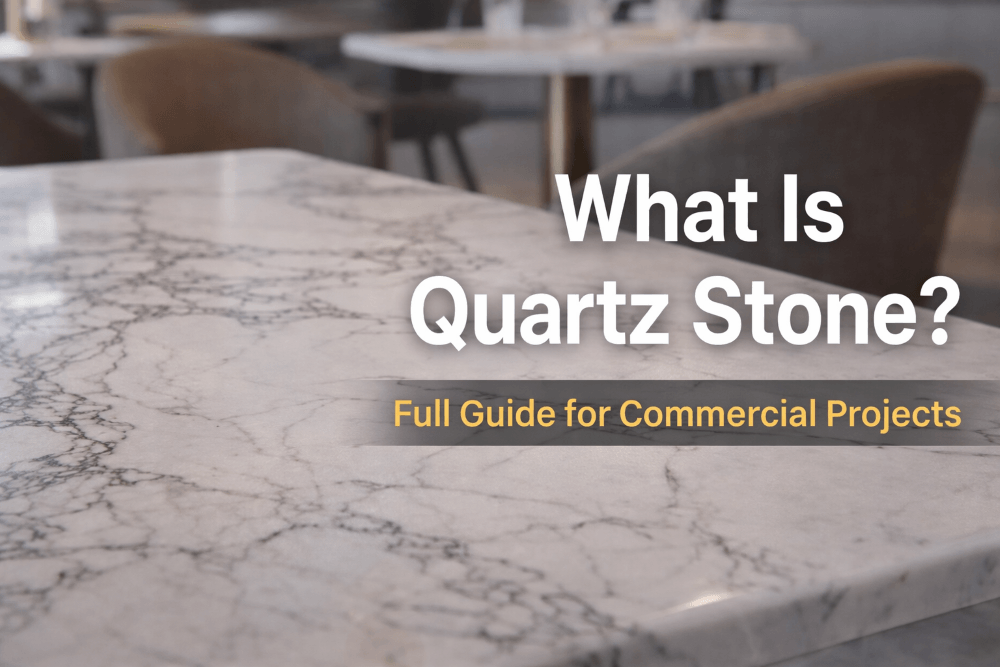
What Is Quartz Stone? Full Guide for Commercial Projects

Quartz stone is one of the most widely used engineered materials in modern commercial interiors. Known for its durability, low maintenance, and consistent appearance, quartz stone is commonly specified for countertops, table tops, and wall applications.

This guide explains what quartz stone is, how it is made, and why it is widely used in commercial projects.

what is quartz stone

What Is Quartz Stone?

Quartz stone is an engineered surface material made from natural quartz combined with resin binders and pigments. Unlike natural stone, quartz stone is manufactured under controlled conditions to achieve consistent color, pattern, and performance.

Because of its composition, quartz stone offers a balance between the natural look of stone and the reliability of engineered materials.

Composition of Quartz Stone

Quartz stone typically consists of:

  • Natural quartz crystals (primary component)
  • Polymer resins (binding material)
  • Pigments and additives (color and pattern control)

This composition gives quartz stone its key properties, including strength, non-porosity, and design flexibility.

How Quartz Stone Is Manufactured

The manufacturing process of quartz stone involves:

  1. Mixing quartz aggregates with resin and pigments
  2. Compressing the mixture under high pressure
  3. Curing and stabilizing the slab
  4. Surface finishing and polishing

This controlled production process ensures uniform quality and predictable performance, which is essential for commercial applications.

Key Performance Features of Quartz Stone

Quartz stone is widely used because of its balanced performance:

Durability

Quartz stone is resistant to scratches and everyday wear, making it suitable for high-use environments.

Non-Porous Surface

The material does not absorb liquids, helping maintain hygiene and reducing staining risks.

Low Maintenance

Unlike some natural stones, quartz stone does not require sealing and is easy to clean.

Consistent Appearance

Engineered production allows for uniform color and pattern across multiple slabs.

Advantages of Quartz Stone in Commercial Projects

Quartz stone is commonly specified in commercial environments due to:

  • Reliable performance under daily use
  • Consistent supply and repeatability
  • Wide design options
  • Ease of fabrication and installation

These advantages make quartz stone a practical choice for large-scale projects.

Limitations of Quartz Stone

Despite its advantages, quartz stone also has limitations:

  • Sensitivity to prolonged UV exposure
  • Not ideal for outdoor environments
  • Heat resistance is lower compared to sintered stone

Understanding these limitations helps ensure proper application.

Applications of Quartz Stone

Quartz stone is widely used in:

Countertops

Ideal for kitchens, commercial workspaces, and hospitality environments.

Table Tops

Used in restaurants, cafés, and office spaces.

Wall Cladding

Applied in interior walls for a clean and modern look.

Quartz Stone vs Natural Stone

Compared to natural stone materials like marble or granite:

  • Quartz stone offers more consistency
  • Requires less maintenance
  • Provides better control over design

However, natural stone may offer more unique patterns and higher heat resistance.

Conclusion

Quartz stone is a versatile engineered material that combines durability, consistency, and design flexibility. Its performance and ease of use make it a reliable choice for commercial interiors, particularly in applications such as countertops and table tops.

For project-specific solutions, it is important to consider both performance requirements and application environments when selecting quartz stone.

For detailed specifications and available options, explore our quartz stone collection.

✅ FAQ

What is quartz stone made of?

Quartz stone is made of natural quartz combined with resin and pigments to form a durable engineered surface.

Is quartz stone suitable for commercial use?

Yes. Quartz stone is widely used in commercial environments due to its durability and low maintenance.

Can quartz stone be used outdoors?

Quartz stone is generally not recommended for outdoor use due to UV sensitivity.

Does quartz stone require sealing?

No. Quartz stone is non-porous and does not require sealing.

Is quartz stone better than marble?

Quartz stone is easier to maintain and more consistent, while marble offers a more natural appearance.

Leave a Comment

Your email address will not be published. Required fields are marked *

Scroll to Top