
Quartz vs Marble: Which Is Better for Commercial Projects?
When selecting surface materials for commercial projects, one of the most common comparisons is quartz vs marble. Both materials are widely used in hospitality, retail, and interior design, but they differ significantly in performance, maintenance, and long-term practicality.
This guide compares quartz and marble from a commercial perspective, helping designers, contractors, and project owners make informed decisions.
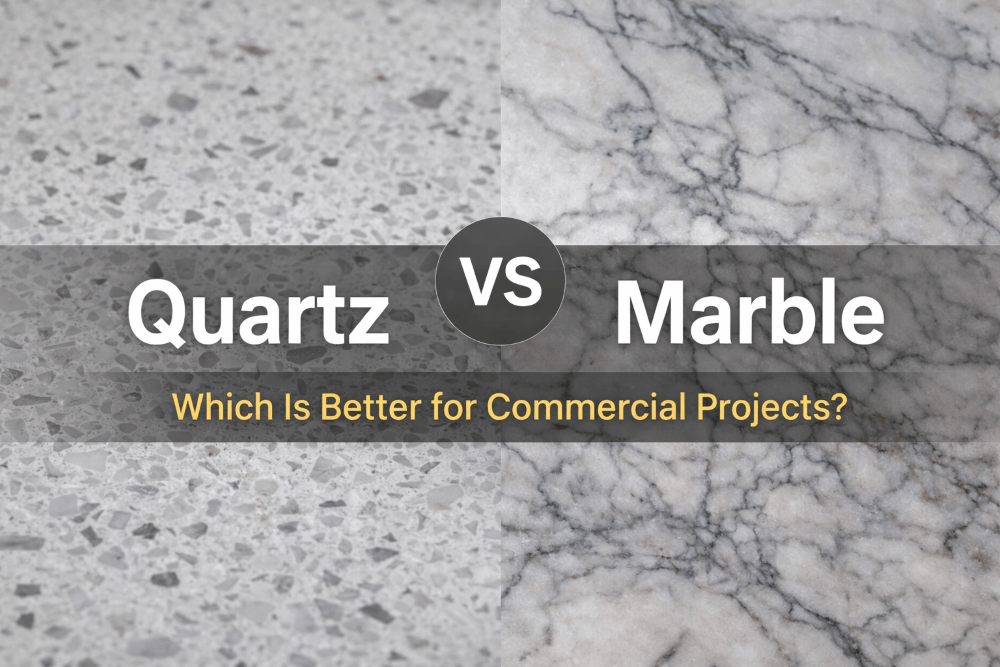
Quartz vs Marble: Key Differences Overview
The main difference between quartz and marble lies in how they are formed.
- Quartz is an engineered material made from natural quartz and resin
- Marble is a natural stone formed over time under geological conditions
This difference directly impacts durability, consistency, and maintenance.
Appearance: Natural Variation vs Controlled Design
Marble is known for its unique veining and natural beauty. Each slab is different, making it a preferred choice for high-end, design-driven spaces.
Quartz, on the other hand, offers:
- Consistent patterns
- Controlled color options
- Repeatable designs across projects
For commercial environments requiring uniformity, quartz often provides a more practical solution.
Durability and Performance
Durability is one of the most important factors in the quartz vs marble comparison.
Quartz
- Strong resistance to scratches
- Non-porous surface
- Stable performance in high-use environments
Marble
- Softer surface, more prone to scratches
- Porous material, can absorb liquids
- More sensitive to acids and chemicals
In high-traffic commercial settings, quartz generally offers more reliable long-term performance.
Maintenance Requirements
Maintenance is where quartz and marble differ significantly.
Quartz
- Easy to clean
- Does not require sealing
- Resistant to staining
Marble
- Requires regular sealing
- Susceptible to staining
- Needs careful cleaning to avoid damage
For projects with frequent usage and cleaning, quartz reduces long-term maintenance effort.
Cost Considerations
Cost varies depending on quality, sourcing, and project scale.
- Marble can vary widely in price due to natural variation
- Quartz typically offers more predictable pricing
In large commercial projects, cost consistency can be an advantage when working with quartz.
Best Use Cases for Each Material
Quartz Is Ideal For:
- Commercial countertops
- Restaurant and café table tops
- High-traffic interior spaces
- Projects requiring consistent appearance
Marble Is Ideal For:
- Feature walls
- Luxury interiors
- Low-traffic decorative applications
- Projects prioritizing natural aesthetics
Quartz vs Marble for Table Tops and Countertops
In applications such as table tops and countertops:
- Quartz provides better resistance to daily wear
- Marble offers a more premium but delicate surface
For commercial furniture and work surfaces, quartz is often preferred due to its durability and ease of maintenance.
Conclusion
The choice between quartz vs marble depends on project priorities.
- Choose quartz for durability, consistency, and low maintenance
- Choose marble for natural beauty and unique aesthetics
In commercial environments where performance and practicality are critical, quartz is often the more efficient solution. However, marble remains a strong choice for design-focused applications.
For more details about material properties and available options, explore our quartz stone solutions.
❓ FAQ
Is quartz better than marble for commercial use?
Quartz is generally more durable and easier to maintain, making it more suitable for high-traffic commercial environments.
Does marble stain more easily than quartz?
Yes. Marble is porous and more prone to staining, while quartz is non-porous and more resistant.
Which material lasts longer?
Quartz typically maintains its performance longer in commercial settings due to its resistance to wear and staining.
Is marble more expensive than quartz?
Marble can be more expensive depending on the type and sourcing, while quartz usually offers more consistent pricing.
Can quartz look like marble?
Yes. Many quartz designs replicate the appearance of marble while offering better durability.