
Why Restaurants Are Replacing Marble Tables
For decades, natural marble represented luxury in restaurant interiors. Its elegant veining and timeless appeal made it a favorite choice for upscale dining spaces.
Today, however, restaurant owners, hospitality designers, and commercial furniture buyers are increasingly selecting engineered materials instead of natural marble.
The shift is not about abandoning luxury—it is about choosing materials that better support modern restaurant operations.
This article explains why many restaurants are replacing marble tables and which alternatives are becoming the preferred choice.
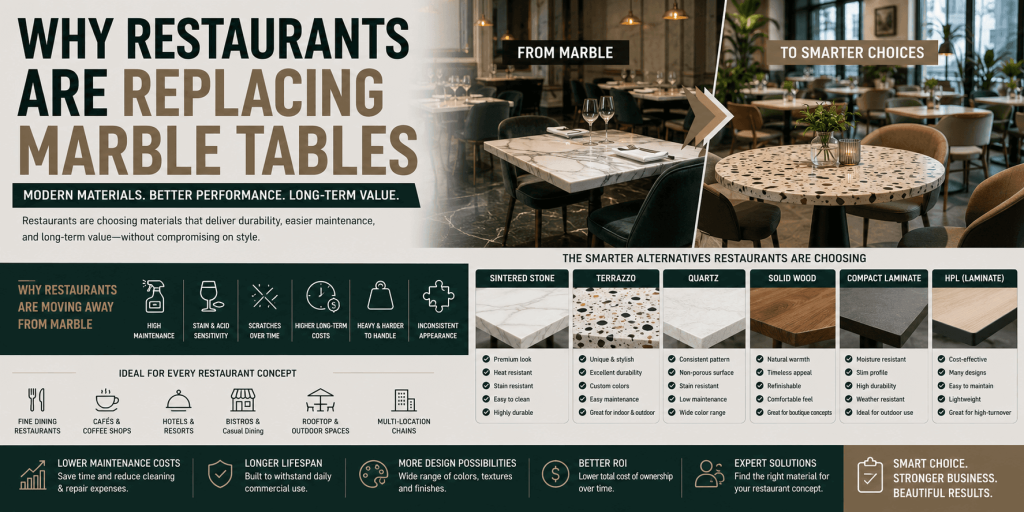
Restaurant Priorities Have Changed
Restaurants today operate differently than they did ten or twenty years ago.
Modern hospitality businesses focus on:
- Higher seating turnover
- Lower maintenance costs
- Faster cleaning
- Longer furniture lifespan
- Consistent brand appearance
- Better return on investment
Furniture is expected to contribute to operational efficiency as much as to interior aesthetics.
The Challenges of Natural Marble
Marble remains a premium natural material, but commercial restaurants often encounter practical challenges.
Common considerations include:
Regular Maintenance
Marble requires more attention than many engineered materials to maintain its appearance over time.
Surface Wear
Busy restaurants experience constant contact with tableware, serving equipment, and daily customer use.
Over time, natural stone surfaces may show signs of wear that require professional restoration.
Restaurant Cleaning Requirements
Dining tables are cleaned many times each day.
Restaurant operators increasingly prefer materials that simplify routine cleaning and reduce long-term maintenance requirements.
Cost Over the Product Life Cycle
Although the initial purchase is important, hospitality buyers increasingly evaluate the total cost of ownership, including maintenance, repairs, and replacement over time.
What Materials Are Restaurants Choosing Instead?
Rather than relying on one replacement material, restaurants are selecting solutions based on their concept, budget, and operational needs.
Sintered Stone
Sintered stone has become one of the leading replacements for marble in premium hospitality projects.
Restaurants value it for its:
- Contemporary appearance
- Excellent stain resistance
- Heat resistance
- Easy maintenance
- Wide range of finishes
It is commonly specified for fine dining restaurants, hotel restaurants, and modern hospitality interiors.
Terrazzo
Terrazzo has returned as a popular design material for commercial dining.
Its unique aggregate patterns allow restaurants to create distinctive interiors while offering reliable commercial performance.
Terrazzo is especially popular in:
- Coffee shops
- Boutique restaurants
- Bakeries
- Contemporary cafés
- Lifestyle hospitality brands
Quartz
Engineered quartz remains a practical solution for many indoor restaurant applications.
Its consistent appearance and easy maintenance make it suitable for controlled interior environments.
Other Commercial Materials
Depending on the project, restaurants may also choose:
- Compact laminate
- High-pressure laminate (HPL)
- Solid wood
- Hybrid commercial tabletops
Each material offers different advantages depending on the design concept and operating requirements.
What Restaurant Owners Consider Today
Material selection is no longer based on appearance alone.
Commercial buyers typically evaluate:
- Daily maintenance
- Commercial durability
- Long-term operating costs
- Interior design consistency
- Customization options
- Supplier reliability
These practical considerations often influence purchasing decisions more than traditional luxury materials.
The Growing Role of Engineered Surfaces
Over the past decade, engineered materials have become increasingly common in hospitality furniture.
They allow designers to achieve premium aesthetics while meeting the practical demands of busy restaurant environments.
For many projects, engineered surfaces now provide a more balanced combination of appearance, durability, and maintenance efficiency than natural marble.
Conclusion
Restaurants are not replacing marble because it has lost its appeal.
Instead, they are choosing materials that better align with today’s commercial hospitality requirements.
Sintered stone, terrazzo, quartz, and other engineered surfaces enable restaurants to create beautiful interiors while improving operational efficiency and reducing long-term maintenance concerns.
For hospitality projects seeking both design quality and commercial practicality, these materials have become compelling alternatives to traditional marble tables.
FAQ
Why are restaurants replacing marble tables?
Many restaurants are choosing engineered materials because they offer easier maintenance, strong commercial durability, and lower long-term operating costs while maintaining a premium appearance.
What is replacing marble in modern restaurants?
Sintered stone, terrazzo, quartz, compact laminate, and other engineered surfaces are increasingly used in commercial restaurant projects.
Is marble still used in restaurants?
Yes. Marble is still specified for certain hospitality projects, particularly where natural stone aesthetics are a priority. However, many commercial operators now consider engineered alternatives for everyday restaurant use.
Which material offers the best balance between appearance and maintenance?
Many hospitality designers consider sintered stone and terrazzo to provide an excellent balance of premium aesthetics, durability, and ease of maintenance for commercial dining environments.
How do restaurants choose tabletop materials?
Restaurant buyers typically evaluate maintenance requirements, durability, design compatibility, customization options, supplier capabilities, and overall lifecycle value before selecting a tabletop material.