
Why European Restaurants Are Switching to Sintered Stone Tables
Across Europe, restaurant owners, hospitality groups, and interior designers are rethinking how dining spaces are furnished. As operating costs rise and customer expectations evolve, table materials are being evaluated not only for appearance but also for durability, maintenance, and long-term value.
One material that continues to gain attention is the restaurant sintered stone table.
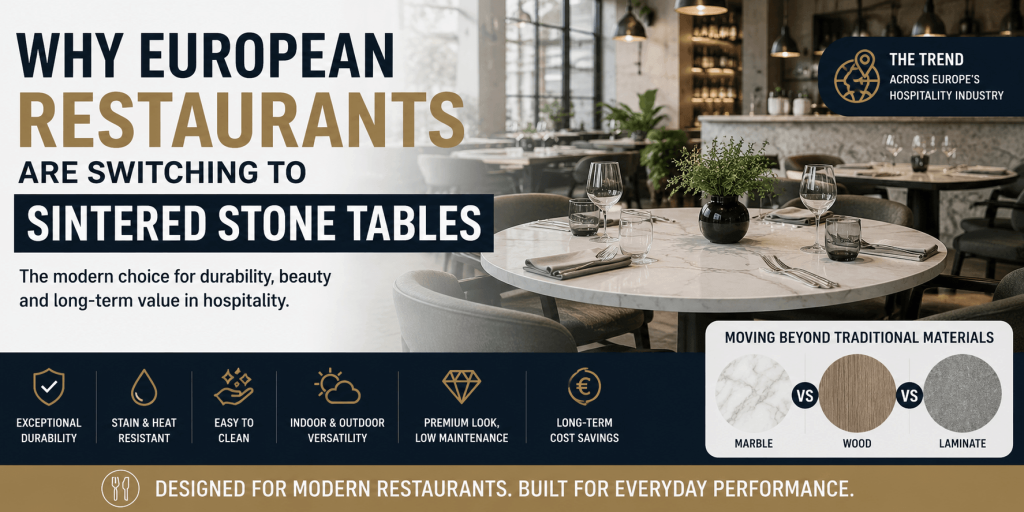
From modern cafés in Paris to upscale dining venues in Milan and boutique hospitality projects across Northern Europe, sintered stone tables are increasingly replacing traditional marble, wood, and laminate surfaces.
This article explores why European restaurants are making the switch and what makes sintered stone one of the fastest-growing hospitality furniture materials today.
The Changing Requirements of Modern Restaurants
Restaurant furniture must perform under constant daily use.
Unlike residential dining tables, hospitality tables are exposed to:
- Frequent cleaning
- Food and beverage spills
- Heavy customer traffic
- Daily movement and rearrangement
- Long operating hours
As a result, restaurant owners increasingly prioritize materials that combine aesthetics with practical performance.
Why Traditional Materials Are Losing Popularity
Many restaurants still use marble, wood, or laminate table tops. While these materials remain popular, they also present challenges in high-traffic hospitality environments.
Marble Tables
Marble offers a luxurious appearance but requires ongoing maintenance.
Common concerns include:
- Staining from food and beverages
- Surface etching
- Higher maintenance requirements
- Long-term appearance changes
Wood Tables
Wood creates warmth and character but can be affected by:
- Moisture exposure
- Surface scratches
- Daily wear
- Frequent refinishing requirements
Laminate Tables
Laminate remains a budget-friendly solution but may lack the premium appearance desired by many modern hospitality brands.
Why Sintered Stone Tables Are Gaining Market Share
The growth of restaurant sintered stone tables is largely driven by operational benefits.
Restaurant owners are increasingly looking for materials that reduce maintenance while maintaining a premium appearance.
Exceptional Stain Resistance
Food service environments constantly expose table surfaces to:
- Coffee
- Wine
- Sauces
- Oils
- Desserts
Sintered stone provides excellent stain resistance, helping maintain a clean appearance throughout years of use.
This is particularly important for busy restaurants with high customer turnover.
Easy Daily Maintenance
One of the most frequently cited advantages of sintered stone is ease of maintenance.
Daily cleaning typically requires only standard hospitality cleaning procedures.
For restaurant operators, this means:
- Reduced maintenance effort
- Consistent appearance
- Lower long-term operating costs
Premium Design Without the Maintenance of Marble
Many European hospitality projects seek the visual appeal of marble without the associated maintenance concerns.
Modern sintered stone surfaces can achieve:
- Marble-look aesthetics
- Contemporary stone finishes
- Minimalist designs
- Luxury hospitality appearances
This allows restaurants to maintain a premium image while simplifying operations.
Durability for High-Traffic Dining Spaces
Restaurant furniture experiences significantly more use than residential furniture.
Sintered stone performs well in environments such as:
- Casual dining restaurants
- Fine dining venues
- Hotel restaurants
- Food halls
- Coffee shops
Its durability makes it particularly attractive for hospitality projects where furniture is expected to maintain its appearance over many years.
Indoor and Outdoor Flexibility
Another reason European restaurants are adopting sintered stone is its suitability for multiple environments.
Many hospitality businesses now operate:
- Outdoor terraces
- Rooftop dining spaces
- Garden cafés
- Sidewalk dining areas
Unlike some traditional materials, sintered stone can be specified for both indoor and outdoor hospitality furniture applications.
Sustainability Considerations
Sustainability is becoming an increasingly important factor in European hospitality design.
Restaurant operators are placing greater emphasis on:
- Long product lifecycles
- Reduced replacement frequency
- Durable materials that maintain performance over time
Because sintered stone tables often remain in service longer than many traditional alternatives, they support long-term hospitality investment strategies.
Where Sintered Stone Tables Are Most Commonly Used
Today, restaurant sintered stone tables are frequently specified for:
Modern Cafés
Clean aesthetics combined with easy maintenance.
Boutique Restaurants
Premium design with long-term durability.
Hotel Dining Areas
Consistent appearance across large hospitality projects.
Outdoor Dining Spaces
Durability in exposed hospitality environments.
Why European Designers Are Recommending Sintered Stone
Interior designers increasingly recommend sintered stone because it balances:
- Visual appeal
- Durability
- Maintenance efficiency
- Long-term value
Rather than focusing solely on initial purchase cost, many hospitality projects now evaluate materials based on lifecycle performance.
In this comparison, sintered stone continues to perform strongly.
Conclusion
The growing popularity of restaurant sintered stone tables reflects broader changes in the hospitality industry. Restaurant operators today require furniture that not only looks attractive but also performs reliably under constant use.
By combining durability, easy maintenance, premium aesthetics, and long-term value, sintered stone has become one of the most practical table materials for modern European restaurants.
As hospitality projects continue to prioritize lifecycle performance and operational efficiency, the adoption of sintered stone tables is expected to grow even further.
Related Hospitality Resources
- Best Table Top Materials for Hospitality Projects
- Sintered Stone Dining Tables for European Hospitality Projects
- Sintered Stone vs Marble Tables for Restaurants
- Best Alternatives to Marble for Hospitality Tables
- Why Restaurants Are Replacing Marble Tables
FAQ
Why are restaurants switching to sintered stone tables?
Restaurants are choosing sintered stone tables because they offer durability, stain resistance, easy maintenance, and a premium appearance suitable for hospitality environments.
Are sintered stone tables better than marble tables?
For many restaurant applications, sintered stone provides similar aesthetics with lower maintenance requirements and improved resistance to everyday wear.
Are sintered stone tables suitable for outdoor dining?
Yes. Sintered stone is commonly used for both indoor and outdoor hospitality furniture due to its durability and weather resistance.
Do sintered stone tables require special maintenance?
No. Routine cleaning is generally sufficient to maintain their appearance in hospitality environments.
What types of restaurants use sintered stone tables?
Sintered stone tables are widely used in cafés, fine dining restaurants, hotel dining areas, food halls, and outdoor hospitality spaces.