
Sintered Stone vs Marble Tables for Restaurants: Which Is Better?
Restaurant furniture must balance appearance, durability, maintenance, and long-term value. Among premium hospitality materials, two options frequently appear on specification lists: marble and sintered stone.
While marble has long been associated with luxury dining environments, many hospitality projects are now evaluating whether a sintered stone vs marble table comparison favors a more modern solution.
This guide examines the differences between these materials from a restaurant perspective, helping hospitality operators, designers, and procurement teams make informed decisions.
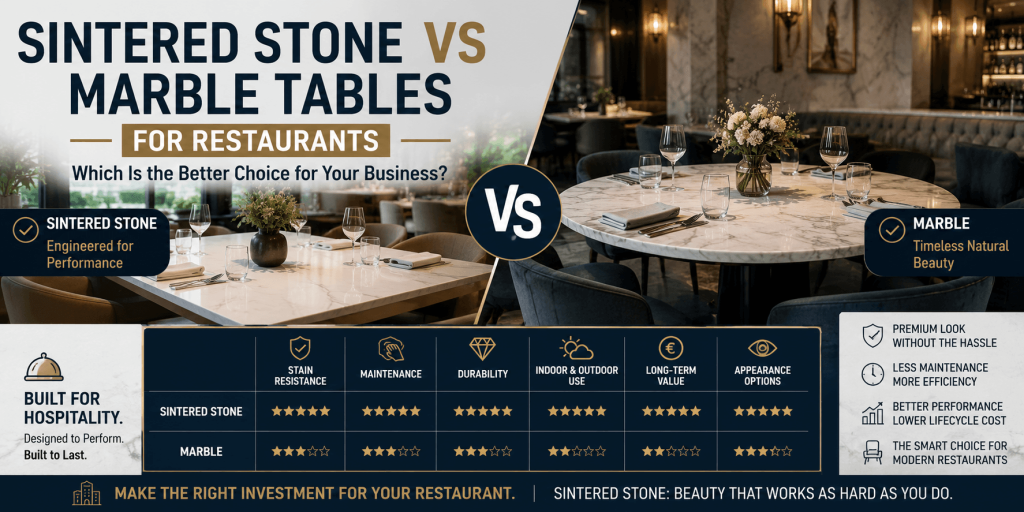
Why Restaurants Compare Sintered Stone and Marble
Both materials offer a premium appearance.
Both can elevate the visual identity of a dining space.
Both are commonly specified for:
- Fine dining restaurants
- Boutique cafés
- Hotel restaurants
- Hospitality lounges
- Premium food service environments
However, the real difference often becomes apparent after installation.
Restaurant operators must consider not only aesthetics but also daily operational performance.
Appearance and Design Flexibility
Marble Tables
Marble is valued for its natural beauty.
Each slab features unique veining and color variation, creating a distinctive appearance that cannot be fully replicated.
Marble remains a preferred material in:
- Luxury hospitality environments
- Boutique hotels
- High-end restaurants
Sintered Stone Tables
Sintered stone offers exceptional design flexibility.
Popular options include:
- Marble-look finishes
- Travertine-look surfaces
- Stone-inspired patterns
- Contemporary minimalist designs
Many hospitality projects choose sintered stone because it delivers a premium stone appearance with greater consistency across multiple tables.
Winner: Tie
For pure aesthetics, both materials can achieve premium hospitality designs.
Stain Resistance
Food service environments expose table surfaces to:
- Coffee
- Wine
- Oils
- Sauces
- Desserts
Marble
Marble is porous by nature.
Without proper maintenance, staining can occur over time.
Sintered Stone
Sintered stone is highly resistant to common restaurant spills.
This characteristic makes it particularly attractive for busy hospitality operations.
Winner: Sintered Stone
Daily Maintenance
Maintenance directly impacts restaurant operating costs.
Marble
Marble generally requires more attention to preserve its appearance.
Operators often need to be mindful of acidic foods, staining agents, and ongoing care.
Sintered Stone
Routine cleaning is typically straightforward.
The material is widely chosen because it helps simplify maintenance procedures.
Winner: Sintered Stone
Durability in Hospitality Environments
Restaurant tables experience constant use.
Tables are moved, cleaned, and used repeatedly throughout the day.
Marble
Marble performs well in hospitality environments but can show signs of wear over extended periods.
Sintered Stone
Sintered stone is frequently selected for projects where durability is a primary concern.
It is commonly specified for:
- High-traffic restaurants
- Hotel dining spaces
- Hospitality chains
- Outdoor dining environments
Winner: Sintered Stone
Indoor and Outdoor Applications
Modern restaurants increasingly include:
- Outdoor terraces
- Rooftop dining
- Sidewalk cafés
- Resort dining areas
Marble
Certain marble applications may be used outdoors depending on project conditions and maintenance expectations.
Sintered Stone
Sintered stone is commonly specified for both indoor and outdoor hospitality furniture.
Winner: Sintered Stone
Lifecycle Cost Considerations
The lowest purchase price does not always result in the lowest long-term cost.
Hospitality operators increasingly evaluate:
- Maintenance requirements
- Replacement frequency
- Operational efficiency
- Long-term appearance
While marble offers prestige, sintered stone often provides stronger lifecycle value for commercial hospitality projects.
Winner: Sintered Stone
Which Material Is Better for Restaurants?
The answer depends on project priorities.
Choose Marble if your project prioritizes:
- Natural stone authenticity
- Unique veining
- Luxury aesthetics
- Boutique hospitality concepts
Choose Sintered Stone if your project prioritizes:
- Easy maintenance
- Durability
- Stain resistance
- Indoor and outdoor flexibility
- Long-term operational efficiency
Why More Hospitality Projects Are Choosing Sintered Stone
Across Europe, hospitality designers and restaurant operators increasingly view sintered stone as a practical alternative to marble.
The material offers:
- Premium appearance
- Consistent quality
- Easier maintenance
- Hospitality-focused performance
As operational efficiency becomes increasingly important, many restaurants are transitioning toward sintered stone solutions.
Conclusion
The debate between a sintered stone vs marble table ultimately comes down to balancing aesthetics with operational performance.
Marble continues to hold a strong position in luxury hospitality design. However, for many restaurants, cafés, and hotel dining spaces, sintered stone provides a compelling combination of premium appearance, durability, maintenance efficiency, and long-term value.
For hospitality projects seeking both design impact and practical performance, sintered stone has become one of the most attractive table materials available today.
Related Hospitality Resources
- Best Table Top Materials for Hospitality Projects
- Why European Restaurants Are Switching to Sintered Stone Tables
- Sintered Stone Dining Tables for European Hospitality Projects
- Best Alternatives to Marble for Hospitality Tables
- Why Restaurants Are Replacing Marble Tables
FAQ
Are sintered stone tables better than marble tables for restaurants?
For many hospitality projects, sintered stone tables provide easier maintenance, improved stain resistance, and strong long-term durability while maintaining a premium appearance.
Why do restaurants replace marble tables?
Restaurants often look for alternatives that reduce maintenance requirements while preserving a high-end aesthetic.
Which material is easier to maintain, marble or sintered stone?
Sintered stone is generally easier to maintain in busy hospitality environments.
Can sintered stone tables look like marble?
Yes. Many sintered stone surfaces are designed to replicate the appearance of natural marble.
Which material is better for outdoor restaurant tables?
Sintered stone is commonly preferred for outdoor hospitality applications due to its suitability for exterior environments.