
Best Table Top Materials for Hospitality Projects
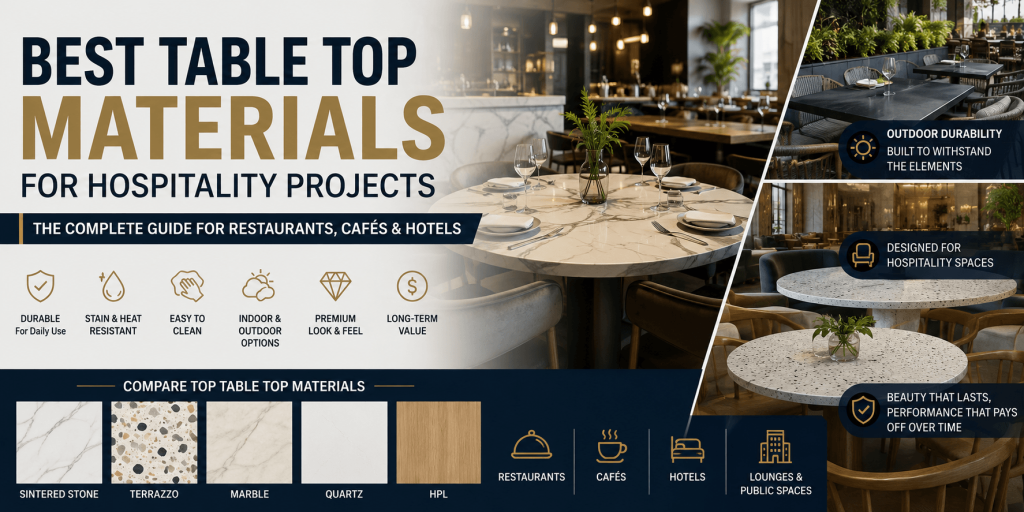
Selecting the right table top material is one of the most important decisions in hospitality furniture design. Whether for restaurants, cafés, hotels, lounges, or food service environments, table tops must balance aesthetics, durability, maintenance requirements, and long-term operating costs.
The best table top materials for hospitality projects are not always the most expensive. Instead, successful hospitality operators focus on materials that can withstand daily use while maintaining their appearance over time.
This guide compares the most common commercial table top materials and explains where each performs best.
What Hospitality Projects Require from Table Tops
Unlike residential furniture, hospitality tables experience constant daily use.
A commercial table top should ideally offer:
- High durability
- Easy cleaning and maintenance
- Resistance to stains and moisture
- Consistent appearance
- Long service life
- Design flexibility
- Cost-effective lifecycle performance
The importance of each factor depends on the project type.
For example:
- Fine dining restaurants prioritize appearance.
- Coffee shops prioritize durability.
- Hotels often require a balance of aesthetics and maintenance.
Sintered Stone Table Tops
Best for Premium Restaurants, Hotels & Outdoor Hospitality
Sintered stone has become one of the fastest-growing materials in commercial furniture.
Advantages
- Excellent stain resistance
- High heat resistance
- UV stability
- Suitable for indoor and outdoor use
- Modern luxury appearance
- Large-format design possibilities
Considerations
- Higher initial material cost
- Specialized fabrication requirements
Sintered stone is increasingly specified for:
- Hotel restaurants
- Luxury cafés
- Rooftop dining areas
- Outdoor hospitality projects
- Boutique hospitality brands
Terrazzo Table Tops
Best for Modern Cafés & Design-Focused Hospitality Spaces
Terrazzo has experienced a strong resurgence in commercial interiors due to its unique appearance and design flexibility.
Advantages
- Distinctive visual character
- Custom aggregate options
- Excellent design versatility
- Suitable for indoor and outdoor applications
Considerations
- Heavier than some alternatives
- Design style may not suit every project
Terrazzo performs particularly well in:
- Boutique cafés
- Bakery shops
- Coffee chains
- Creative hospitality concepts
Marble Table Tops
Best for Luxury Interiors
Marble remains one of the most recognizable hospitality materials.
Advantages
- Natural luxury appearance
- Unique veining patterns
- Strong premium perception
Considerations
- Requires ongoing maintenance
- Susceptible to staining
- Can show wear over time
Marble is commonly used in:
- Luxury hotel lobbies
- Fine dining restaurants
- Boutique hospitality environments
However, many operators are now exploring alternative materials that provide a similar aesthetic with lower maintenance requirements.
Quartz Table Tops
Best for Indoor Hospitality Applications
Quartz offers a balance between performance and design consistency.
Advantages
- Non-porous surface
- Easy maintenance
- Consistent color and pattern
- Wide design selection
Considerations
- Not recommended for outdoor use
- Lower heat resistance than sintered stone
Quartz is commonly used in:
- Hotel dining areas
- Indoor cafés
- Hospitality workstations
- Commercial food service environments
HPL Table Tops
Best for Budget-Conscious Projects
High Pressure Laminate (HPL) remains one of the most economical hospitality table top solutions.
Advantages
- Cost-effective
- Lightweight
- Wide range of finishes
- Easy replacement
Considerations
- Lower perceived value
- Less durable than stone-based materials
HPL is often selected for:
- Fast-casual dining
- Student housing
- Budget hospitality projects
- High-volume restaurant chains
Indoor vs Outdoor Hospitality Applications
Choosing between indoor and outdoor applications significantly affects material selection.
Recommended for Indoor Use
- Quartz
- Marble
- Terrazzo
- Sintered Stone
- HPL
Recommended for Outdoor Use
- Sintered Stone
- Outdoor Terrazzo
Outdoor environments require materials that can tolerate:
- UV exposure
- Temperature fluctuations
- Moisture
- Frequent cleaning
Maintenance & Lifecycle Cost Comparison
Initial purchase cost should not be the only factor.
Hospitality operators should also consider:
| Material | Maintenance | Long-Term Value |
|---|---|---|
| Sintered Stone | Low | Excellent |
| Terrazzo | Low-Medium | Excellent |
| Quartz | Low | Very Good |
| Marble | Medium-High | Good |
| HPL | Low | Moderate |
Over time, materials with higher durability often provide better overall value.
Choosing the Right Material by Hospitality Project Type
Restaurants
Recommended:
- Sintered Stone
- Quartz
Cafés
Recommended:
- Terrazzo
- Sintered Stone
Boutique Hotels
Recommended:
- Sintered Stone
- Marble
- Terrazzo
Outdoor Dining Areas
Recommended:
- Sintered Stone
- Outdoor Terrazzo
Budget Hospitality Projects
Recommended:
- HPL
- Quartz
Conclusion
The best commercial table top materials for hospitality projects depend on project goals, operating requirements, and budget.
For premium performance and long-term durability, sintered stone continues to gain market share across hospitality sectors. Terrazzo remains a favorite for design-driven café environments, while quartz and HPL offer practical solutions for indoor commercial applications. Marble continues to serve luxury projects where aesthetics remain the highest priority.
By evaluating maintenance requirements, lifecycle costs, and design objectives together, hospitality operators can select materials that deliver both visual impact and long-term value.
FAQ
1. What is the best table top material for restaurants?
Sintered stone and quartz are among the most popular table top materials for restaurants because they offer excellent durability, stain resistance, and easy maintenance. The best choice depends on the restaurant concept, budget, and design requirements.
2. Which table top material is best for cafés?
Terrazzo and sintered stone are widely used in cafés due to their durability and strong visual appeal. Terrazzo is particularly popular in boutique coffee shops and design-focused hospitality spaces.
3. Is marble suitable for hospitality projects?
Yes. Marble is commonly used in luxury hospitality projects because of its premium appearance. However, it generally requires more maintenance and care than engineered materials such as quartz or sintered stone.
4. Can quartz table tops be used outdoors?
Quartz is generally not recommended for outdoor use because prolonged UV exposure may affect the resin binders used in the material. For outdoor hospitality projects, sintered stone is typically a better option.
5. What is the most durable hospitality table top material?
Sintered stone is widely regarded as one of the most durable hospitality table top materials. It offers strong resistance to stains, heat, UV exposure, and daily wear, making it suitable for both indoor and outdoor applications.
6. What table top materials are suitable for outdoor dining areas?
Sintered stone and outdoor-grade terrazzo are among the most suitable materials for outdoor hospitality furniture. Both can withstand exposure to sunlight, moisture, and changing weather conditions.
7. How do hospitality operators choose the right table top material?
Hospitality operators typically evaluate several factors, including durability, maintenance requirements, design style, lifecycle cost, indoor or outdoor use, and expected customer traffic. The ideal material should balance aesthetics with long-term performance.
8. Which hospitality table top material requires the least maintenance?
Quartz, sintered stone, and HPL generally require less maintenance than natural marble. These materials are easy to clean and do not require regular sealing, making them practical choices for high-traffic hospitality environments.