
Structural Solutions for Sintered Stone Tables: Performance, Aesthetics & Cost Balance
When designing custom sintered stone tables for commercial projects, thickness alone is often treated as the primary solution to structural performance. In practice, however, simply choosing between 12mm and 20mm slabs does not always deliver the best balance between load performance, aesthetics, and cost.
For this reason, many commercial projects now adopt engineered structural solutions that go beyond slab thickness. This article introduces two proven reinforcement solutions for sintered stone tables, both designed to improve load performance while offering different visual and design outcomes.
Why Thickness Alone Is Not Enough
In the previous discussion on 12mm vs 20mm sintered stone tables, we highlighted the structural limitations of thin slabs and the cost and weight challenges of thicker solid slabs.
While increasing thickness can improve strength, it also introduces:
Higher material cost
Increased weight
Less flexible design aesthetics
More demanding transportation and installation
From an engineering perspective, structural performance should be achieved through system design, not slab thickness alone.
Two Reinforcement Solutions for Commercial Sintered Stone Tables
To address both performance and design requirements, we offer two engineered structural solutions for custom sintered stone tables. Each solution targets different project priorities while ensuring reliable load performance.
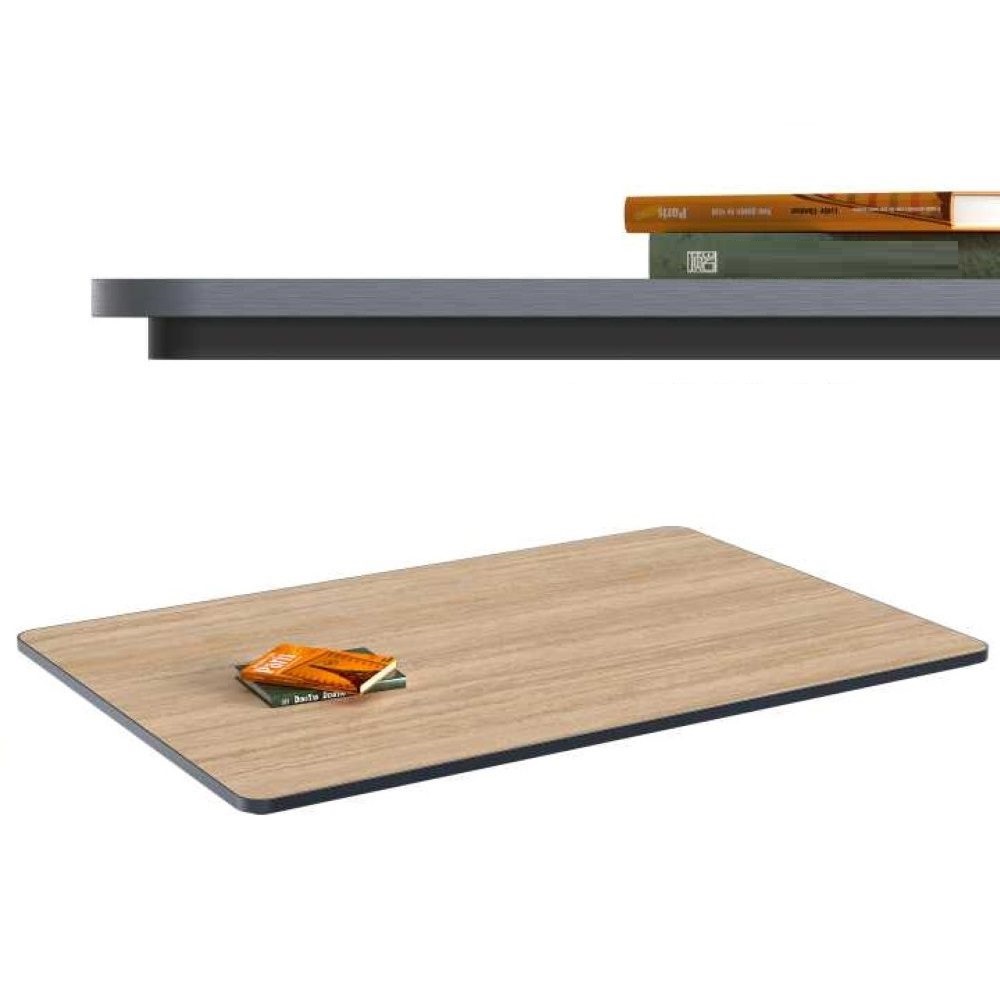
Solution 1: Concealed Plywood Reinforcement (Slim Edge Appearance)
Structure:
11–12mm sintered stone tabletop bonded with a 15mm plywood backing panel.
How It Works
The sintered stone provides surface durability, hygiene, and aesthetics
The plywood backing increases bending resistance and load capacity
The plywood is concealed underneath the tabletop, creating a slim edge profile
Visual Result
From the edge view, the table still appears as an 11–12mm slim profile, delivering a refined and elegant look while benefiting from reinforced structural support.
Typical Applications
Restaurants and cafés prioritizing lightweight design
Hotel dining areas and lounges
Design-driven commercial interiors
This solution is ideal when visual lightness and structural reliability must coexist.
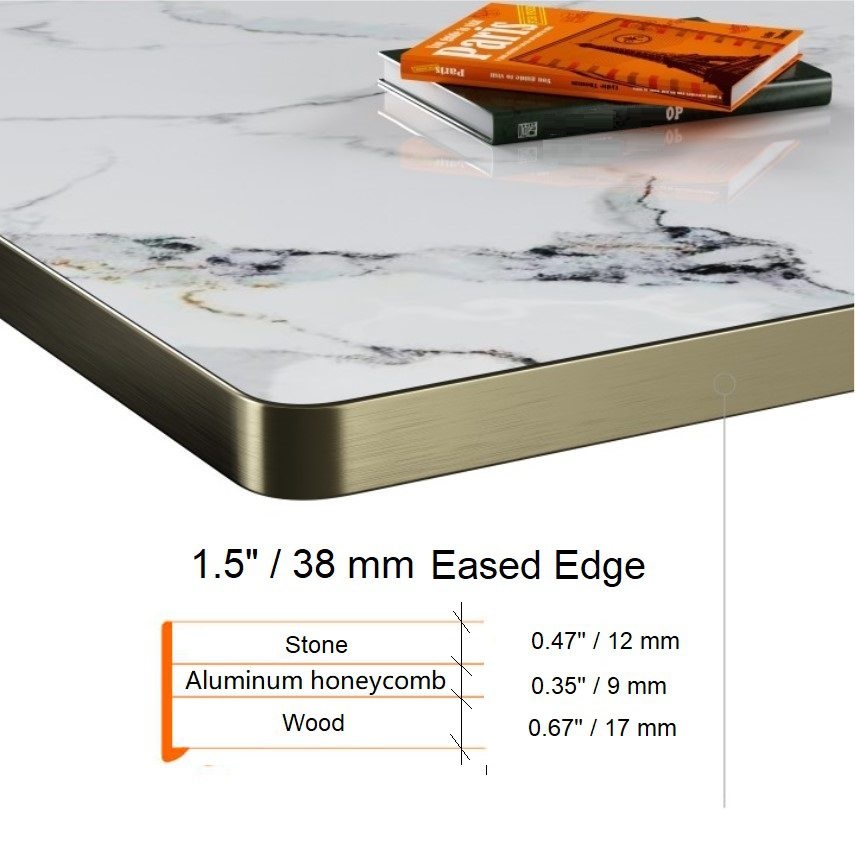
Solution 2: Metal Wrapped Edge Reinforcement (Solid & Robust Appearance)
Structure:
Reinforced tabletop with an integrated metal edge wrapping.
How It Works
The metal edge conceals the internal reinforcement layers
The wrapped edge could form a 26-38mm visual thickness
The metal layer improves edge impact resistance
Visual Result
The table presents a solid, robust appearance, suitable for environments where durability and perceived strength are important.
Typical Applications
High-traffic commercial spaces
Hotel public areas
Restaurants requiring a strong, stable visual identity
This solution balances structural performance with a bold, commercial-grade aesthetic.
These structural systems directly influence the final appearance and durability of the tabletop, including sintered stone table edge profiles.
Structural Performance Compared to 20mm Solid Sintered Stone
Both reinforcement solutions are designed to deliver load performance comparable to, and in many cases more efficient than, 20mm solid sintered stone slabs, especially when paired with proper metal base design.
Key performance considerations include:
Reduced deflection over large spans
Improved load distribution
Enhanced long-term stability
Rather than relying solely on material thickness, these solutions optimize structural efficiency.
Cost Efficiency Compared to Solid 20mm Slabs
From a project budgeting perspective, reinforced structural solutions often provide:
Lower material cost than solid 20mm slabs
Reduced overall weight
More flexible fabrication options
Easier handling and installation
For many commercial projects, this results in a better cost-to-performance ratio without compromising reliability.
Which Solution Should You Choose?
Both solutions are engineered for commercial use, but they serve different design and project priorities:
Concealed plywood reinforcement
→ Best for projects emphasizing slim, elegant table profilesMetal wrapped edge reinforcement
→ Best for projects requiring a stronger, more substantial appearance
Selection should be based on design intent, usage intensity, and overall project requirements, rather than slab thickness alone.
Why These Solutions Work for OEM and Commercial Projects
These reinforcement solutions are not temporary fixes. They are repeatable, scalable engineering systems suitable for OEM furniture production and large commercial rollouts.
They offer:
Consistent structural performance
Controlled manufacturing tolerances
Design flexibility across multiple projects
Reliable long-term durability
Conclusion
For commercial sintered stone tables, structural performance does not depend solely on slab thickness. By adopting engineered reinforcement solutions, it is possible to achieve better load performance, improved aesthetics, and optimized cost efficiency.
Whether prioritizing a slim edge appearance or a robust, solid look, these two structural solutions provide reliable options for modern commercial projects. Milestone International provides both reinforced solutions for commercial applications.
👉 Explore our custom sintered stone table tops supply options or request a quote for your project.