Sintered Stone Table Edge Profiles Explained: Slim, Beveled, Eased & Mitered

In commercial furniture projects, edge profiles for sintered stone tables are often treated as a purely aesthetic choice. In reality, edge design plays a critical role in structural performance, safety, durability, and long-term usability.

More importantly, edge profiles are not standalone design decisions. They are the result of engineered structural systems behind the tabletop. This article explains the most common edge profiles used in commercial sintered stone tables—slim, beveled, eased, and mitered—and how each is achieved through different reinforcement solutions.

Why Edge Profiles Are More Than a Design Detail

In high-traffic commercial environments such as restaurants, hotels, and public spaces, table edges are exposed to:

  • Frequent contact and impact

  • Daily cleaning and maintenance

  • Long-term mechanical stress

A well-designed edge profile affects:

  • Visual thickness and proportion

  • Edge safety and touch comfort

  • Resistance to chipping and damage

  • Overall service life of the table

For this reason, edge profiles must be evaluated from both design and engineering perspectives.

Structural Systems Behind Sintered Stone Table Edges

Before discussing specific edge profiles, it is important to understand the two main structural systems used in commercial sintered stone tables.

1. Concealed Plywood Backing System (Primary Solution)

This system combines:

  • An 11–12mm sintered stone slab

  • A concealed plywood backing panel bonded to the underside

The plywood backing increases bending resistance and load capacity while remaining visually hidden. This system provides high structural efficiency with maximum design flexibility, making it the primary solution for most custom commercial projects.

2. Metal Wrapped Reinforcement System

In this system, internal reinforcement is combined with a metal edge wrapping. The metal layer conceals internal materials and enhances edge protection, while creating a stronger and more substantial visual appearance.

Each system enables different edge profiles and visual outcomes.

👉  Structural Reinforcement Systems for Sintered Stone Tables

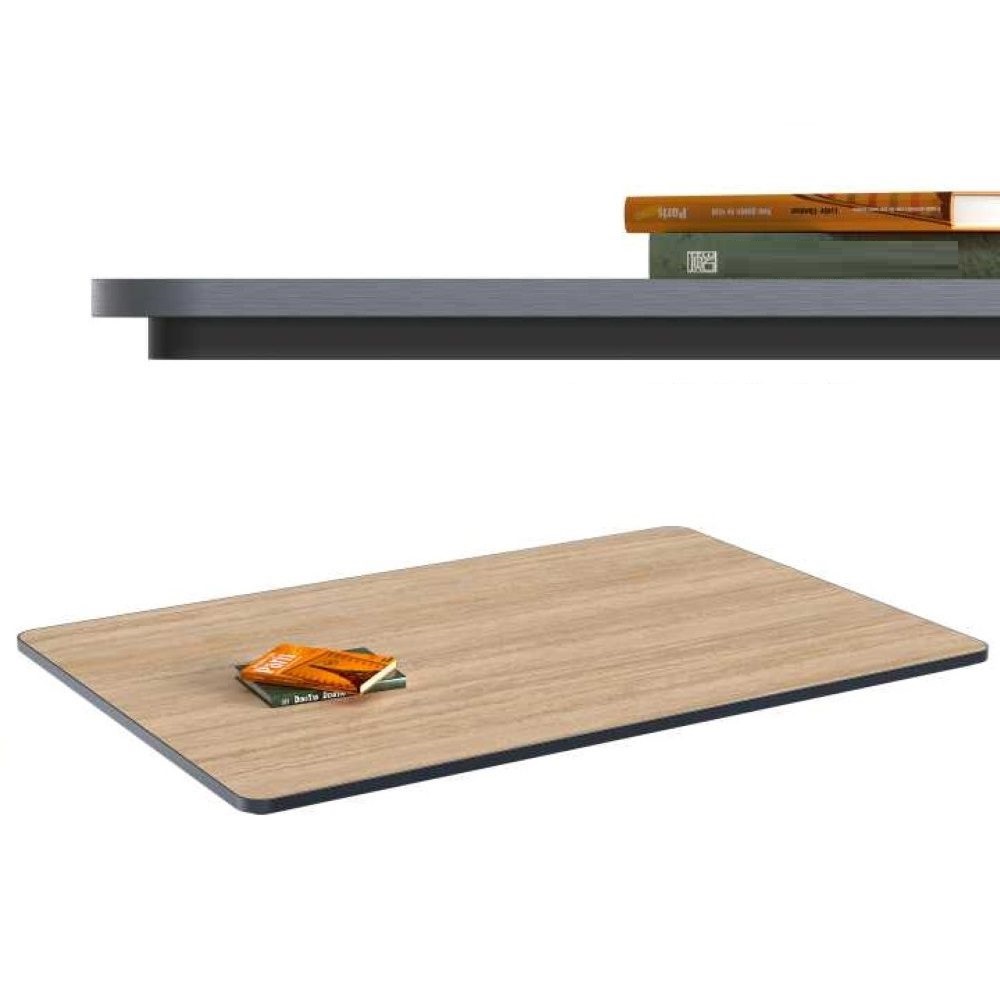
Slim Edge Appearance with Concealed Plywood Backing

A slim edge appearance is one of the most requested design outcomes in modern commercial interiors.

How It Is Achieved

  • The sintered stone slab remains visually exposed at the edge

  • The plywood backing is inset from the perimeter

  • From the side view, the tabletop appears as an 11–12mm thin edge

Design & Application

This solution is ideal for:

  • Design-driven restaurants and cafés

  • Hotel dining areas and lounges

  • Commercial interiors seeking a light, refined aesthetic

Despite its slim appearance, the concealed plywood backing ensures reliable load performance when paired with a proper table base design.

sintered stone table structure-slim appearance
Slim Edge Appearance

Beveled Edge Options with Plywood-Backed Tabletops

A common misconception is that plywood-backed tabletops limit edge design options. In practice, beveled edges can also be achieved using the concealed plywood backing system.

Why Beveled Edges Are Used

  • Softer visual transition at the edge

  • Improved touch comfort

  • Reduced risk of edge chipping

Structural Considerations

When properly engineered:

  • The plywood backing remains concealed

  • The beveled profile does not compromise structural integrity

  • The table maintains a balanced appearance between elegance and durability

Beveled edges are often specified for commercial projects that require both visual refinement and enhanced edge safety.

beveled edge
Beveled Edge Appearance

Mitered Edge with Concealed Plywood Structure

Mitered edges are commonly associated with thick solid slabs, but they can also be achieved on plywood-backed sintered stone tabletops through proper structural design.

Key Engineering Principle

  • The mitered edge is formed to create the appearance of a thicker solid slab

  • The internal plywood backing is structurally integrated and visually concealed

  • From the exterior, the tabletop presents a clean, continuous mitered profile

Where Mitered Edges Are Used

  • High-end restaurants

  • Boutique hotels

  • Custom-designed commercial furniture projects

This solution allows designers to achieve a premium, monolithic look without relying solely on thick solid stone slabs.

sintered stone table edge-mitered edge
Mitered Edge Appearance

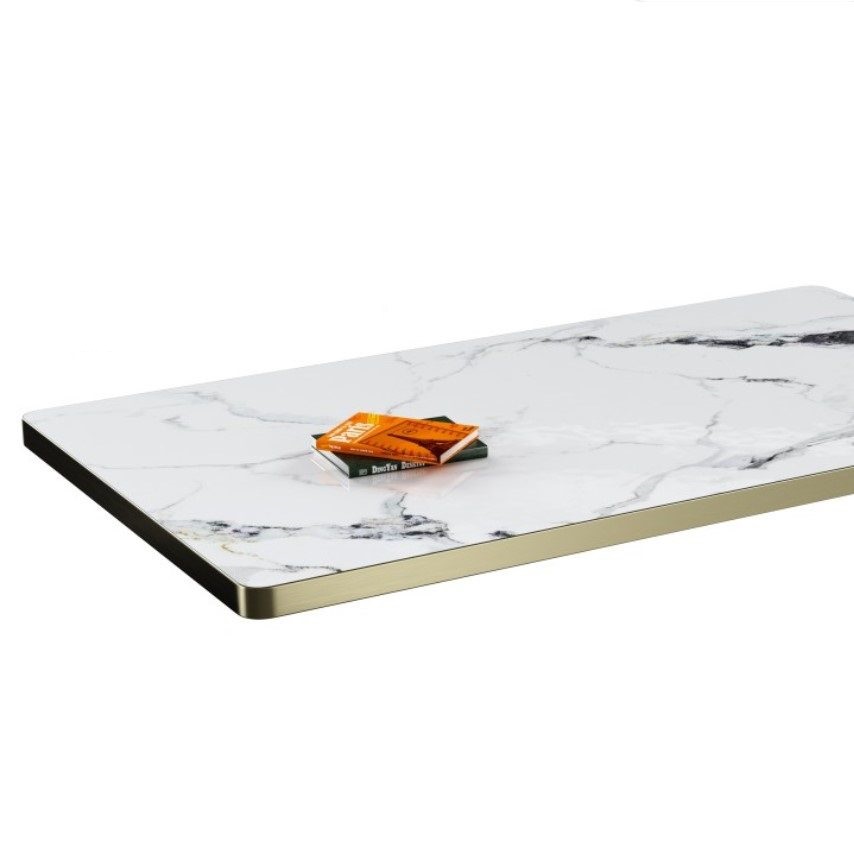
Eased Edge with Metal Wrapped Reinforcement

An eased edge features slightly rounded corners designed for safety and durability. This profile is especially effective when combined with a metal wrapped reinforcement system.

Advantages of Metal Wrapped Eased Edges

  • Improved resistance to edge impact

  • Enhanced protection in high-use environments

  • A strong, robust visual presence

Typical Applications

  • Public commercial spaces

  • Hotel banquet areas

  • Restaurants with high table turnover

The metal wrapped eased edge prioritizes long-term durability and user safety while maintaining a professional commercial appearance.

sintered stone table edge-metal wrapped edge
Metal Wrapped Eased Edge Appearance

Choosing the Right Edge Profile for Commercial Projects

Selecting the appropriate edge profile depends on design intent, usage intensity, and structural system:

  • Slim edge → visual lightness and modern design

  • Beveled edge → balance between elegance and safety

  • Mitered edge → premium, solid appearance

  • Eased edge → durability and edge protection in high-traffic areas

Each profile should be evaluated as part of an integrated structural solution, not as an isolated design feature.

Edge Profiles and Long-Term Performance

Edge design directly influences:

  • Resistance to chipping and damage

  • Ease of maintenance

  • User comfort

  • Overall service life

Properly engineered edge profiles contribute significantly to the long-term performance of sintered stone tables in commercial environments.

Conclusion

Edge profiles for sintered stone tables are not merely decorative elements. They are design outcomes shaped by structural engineering decisions. By combining concealed plywood backing and metal wrapped reinforcement systems, it is possible to achieve a wide range of edge profiles—including slim, beveled, mitered, and eased—without compromising performance.

Understanding the relationship between structure and edge design is essential for selecting the right solution in commercial projects. Milestone International supports a wide range of edge options for commercial table top production. Contact us for a quote for your project.

FAQ

What is the most common edge profile for commercial sintered stone tables?

Slim and beveled edges are the most commonly specified profiles, as they balance aesthetics, safety, and structural performance.

Can mitered edges be made with plywood-backed sintered stone tabletops?

Yes. With proper structural design, mitered edges can be achieved while keeping the plywood backing fully concealed.

What is the difference between beveled and eased edges?

Beveled edges feature an angled transition, while eased edges have a slightly rounded profile designed for improved safety and durability.

Which edge profile is best for high-traffic commercial spaces?

Eased edges combined with metal wrapped reinforcement are often preferred for high-traffic environments due to improved impact resistance.

Do edge profiles affect the durability of sintered stone tables?

Yes. Properly engineered edge profiles significantly improve resistance to chipping, impact, and long-term wear.

Leave a Comment

Your email address will not be published. Required fields are marked *

Scroll to Top